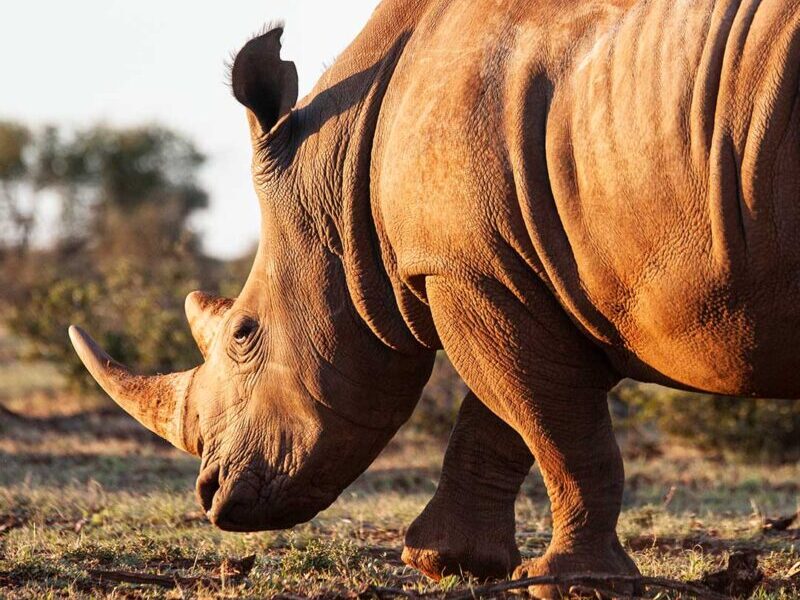
The Threat to Our White Rhino
RHINO HORN DEMAND
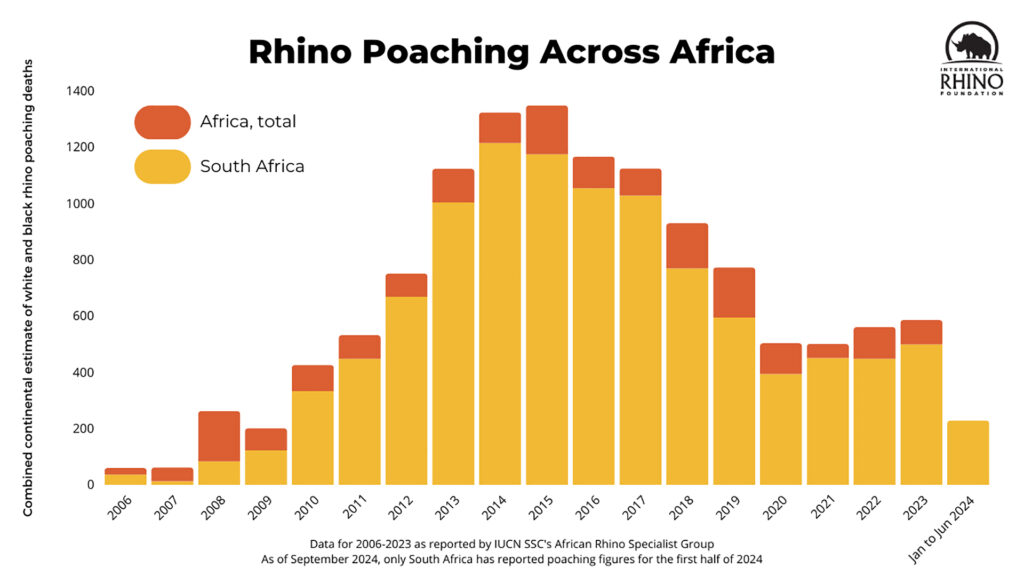
Poaching remains the biggest threat to rhinos, and white rhinos in particular bear the brunt. The demand for rhino horn is the engine behind poaching. It fuels a complex, global black market that exploits both wildlife and vulnerable communities.
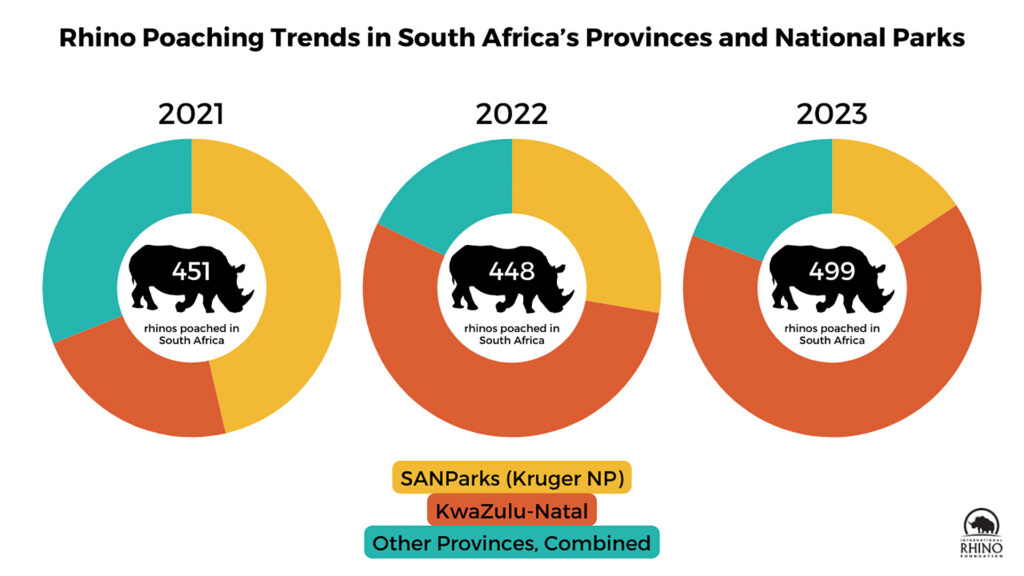
South Africa alone lost over 9,500 rhinos since 2010 – making it the epicenter of the global rhino poaching crisis.
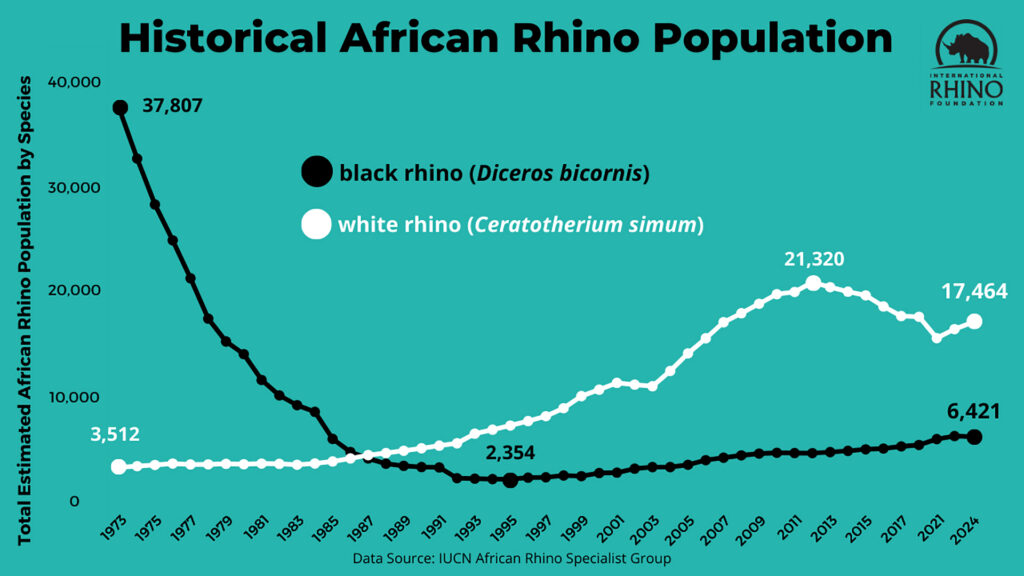
Historically as a species, white rhinos made an incredible comeback from fewer than 100 individuals in the early 1900s to more than 21 000 at the end of 2012. Unfortunately, from 2012 to 2021, their large numbers made them the primary target for rhino poachers, who are part of transnational criminal syndicates looking to sell rhino horn on the black market. During this period, white rhino numbers decreased by 24% to an estimated 15,942.
The International Union for the Conservation of Nature (IUCN) Species Survival Commission’s African Rhino Specialist Group (AfRSG) recently announced the first population increase for the white rhino species in over a decade. This is due to population growth in private reserves, like Rockwood.
While thriving in several regions, the total black rhino population declined slightly over the last years due to heavy poaching in Namibia and Hluhluwe iMfolozi Park in South Africa.
South Africa alone lost over 9,500 rhinos since 2010 – making it the epicenter of the global rhino poaching crisis.
Historically as a species, white rhinos made an incredible comeback from fewer than 100 individuals in the early 1900s to more than 21 000 at the end of 2012. Unfortunately, from 2012 to 2021, their large numbers made them the primary target for rhino poachers, who are part of transnational criminal syndicates looking to sell rhino horn on the black market. During this period, white rhino numbers decreased by 24% to an estimated 15,942.
The International Union for the Conservation of Nature (IUCN) Species Survival Commission’s African Rhino Specialist Group (AfRSG) recently announced the first population increase for the white rhino species in over a decade. This is due to population growth in private reserves, like Rockwood.
While thriving in several regions, the total black rhino population declined slightly over the last years due to heavy poaching in Namibia and Hluhluwe iMfolozi Park in South Africa.
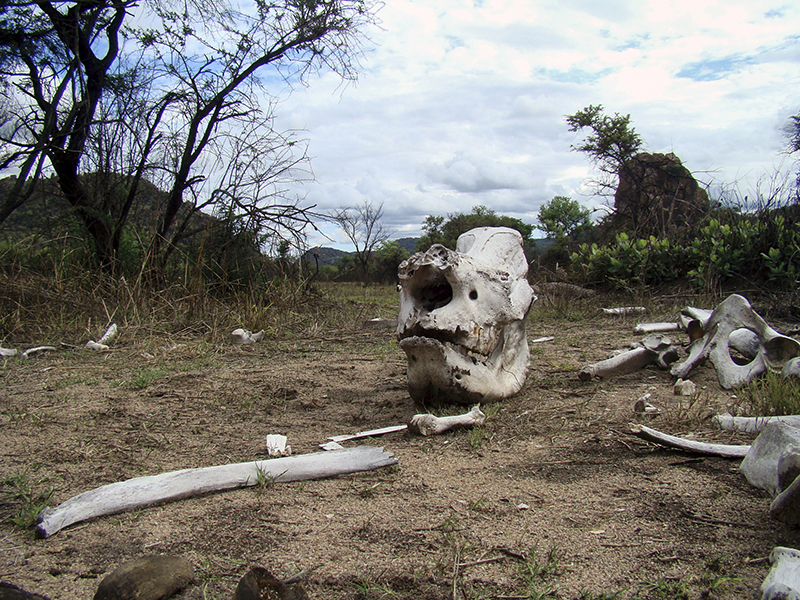
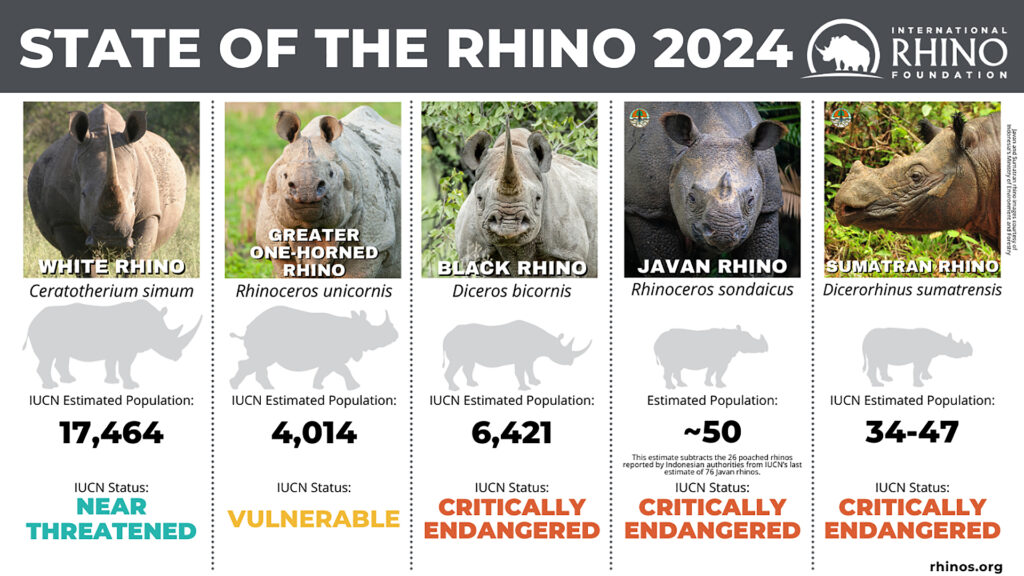
- The total global population of rhinos is approximately 26,700.
- By the end of 2024, the number of white rhinos in Africa dropped to 15,752, down from 17,464 in 2023.
- Black rhinos have increased to 6,788 from the last count of 6,195 in 2022.
- The study analysed data from 11 reserves in the Greater Kruger region – home to roughly 25 percent of all of Africa’s rhinos – from 2017 to 2023. In the areas where rhino horns were trimmed, poaching was reduced by 78 percent.

TRADITIONAL MEDICINE
In some Asian cultures, especially within Traditional Chinese Medicine (TCM), rhino horn is falsely believed to cure ailments, like fever, hangovers, and even cancer.
STATUS SYMBOL
In affluent circles, particularly in Vietnam and China, rhino horn is flaunted as a luxury item – used in ornaments, tea sets, or gifted to show wealth and power.
Uneducated Value Driver
THE SUPERSTITION
Many cultures in Asia (particularly China and Vietnam) value rhino horn as a potent traditional medicine – where it is ground down to a powder used in tonics mixed by traditional healers.
The superstition further claims that the root of the horn (about 12% of the horn’s core at the base) contains the medicinal properties.
Ironically, rhino horn is made of keratin, the same substance as hair, fingernails, and toenails. There isn’t any medicinal, nutritional, or any aphrodisiac value to it at all. And, like hair and nails, the horn regrows, and can be safely cut off. But, in order to get to the thicker base of the horn, poachers greedily cut deep into the rhinos’ skin – leaving it very little to no chance of survival.
For this reason, rhinos are routinely dehorned to protect them.
At Rockwood, our rhinos are so well-protected that we can let them roam freely with their horns intact – as nature intended.
The superstition further claims that the root of the horn (about 12% of the horn’s core at the base) contains the medicinal properties.
Ironically, rhino horn is made of keratin, the same substance as hair, fingernails, and toenails. There isn’t any medicinal, nutritional, or any aphrodisiac value to it at all. And, like hair and nails, the horn regrows, and can be safely cut off. But, in order to get to the thicker base of the horn, poachers greedily cut deep into the rhinos’ skin – leaving it very little to no chance of survival.
For this reason, rhinos are routinely dehorned to protect them.
At Rockwood, our rhinos are so well-protected that we can let them roam freely with their horns intact – as nature intended.
Lucrative Financial Incentive
RUTHLESS POACHING
A single horn can fetch tens of thousands of dollars, making it more lucrative than gold, platinum, or even cocaine.
Poachers will thus go to incredible lengths to get their hands on rhino horn. These criminal gangs are willing to invest time and money in their schemes – posing as tourists or paying others to pose as tourists to gain intel on reserves and conservations. They use drones, satellites, and helicopters to locate and track rhinos (even using conservationists’ own satellite tags on individuals by bribing vets). They also spare no expense in outfitting poachers with sedative drugs and automatic weapons.
Poachers usually enter a reserve or conservation on foot with military-like precision. Once they’ve located a rhino, they'll and chase it into a remote area. They don’t discriminate – young or old, male or female, even with calf.
They’re well equipped and ruthless. If they don’t kill their victim, they mutilate it and leave it for dead to often wander for days with half their face hacked into, before succumbing to their injuries. Mothers with calves aren’t spared any of this cruelty, and calves are often killed too, so their cries don’t attract attention.
The black-market value of rhino horn varies widely depending on origin, demand, and trafficking routes – but it's consistently astronomical. An African rhino horn can reach $20,000 - $60,000 per kilogram.
Poachers will thus go to incredible lengths to get their hands on rhino horn. These criminal gangs are willing to invest time and money in their schemes – posing as tourists or paying others to pose as tourists to gain intel on reserves and conservations. They use drones, satellites, and helicopters to locate and track rhinos (even using conservationists’ own satellite tags on individuals by bribing vets). They also spare no expense in outfitting poachers with sedative drugs and automatic weapons.
Poachers usually enter a reserve or conservation on foot with military-like precision. Once they’ve located a rhino, they'll and chase it into a remote area. They don’t discriminate – young or old, male or female, even with calf.
They’re well equipped and ruthless. If they don’t kill their victim, they mutilate it and leave it for dead to often wander for days with half their face hacked into, before succumbing to their injuries. Mothers with calves aren’t spared any of this cruelty, and calves are often killed too, so their cries don’t attract attention.
The black-market value of rhino horn varies widely depending on origin, demand, and trafficking routes – but it's consistently astronomical. An African rhino horn can reach $20,000 - $60,000 per kilogram.


- In rural areas near reserves, poaching offers quick cash –often more than a year’s income.
- Some buyers treat rhino horn like gold, betting its value will rise as rhinos become scarcer.
- Sophisticated international criminal syndicate groups manage the poaching logistics, smuggling routes, and laundering operations. These networks often overlap with drug and arms trafficking.
- In some regions, officials are bribed or complicit, allowing horns to move across borders with minimal resistance.